 |
 |
 |
 |
 |
 |
 |
 |
 |
 |
Distinguished Service in World War II and the Korean War
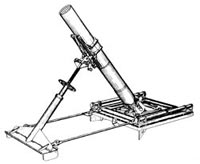
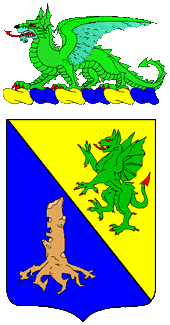
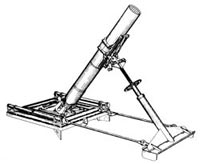
The insignia is the Regimental Coat of Arms of the Chemical Corps
Distinguished Service in World War II and the Korean War
The insignia is the Regimental Coat of Arms of the Chemical Corps |
This website is for and about four-deucers – the men who served in the U. S. Army's chemical mortar battalions in World War II and the Korean War. It is dedicated to every one of them, but especially to those who made the supreme sacrifice in defense of our beloved country. They have earned the respect and tribute of all freedom-loving Americans.
Browse through the menu below to read the history of the 4.2 inch mortar, review when and where the many battalions served, find out about contact persons and planned reunions, and more.
We've done everything we can to provide accurate and up to date information, but we're certainly not perfect and it's also obvious that we're missing a lot of desirable information. We badly need your help in maintaining and improving this website. We especially need missing information, corrections of errors, and updated information on contacts and reunions. Please send email to the Webmaster, Bruce Elliott, or postal mail to him at P.O. Box 498, Henniker NH 03242.
On behalf of all four-deucers, thank you very much for your help.
Freedom Is Not Free
The Charters of Freedom
Gettysburg Address

Who
Denis Edward O'Brien
It is the soldier, not the reporter,
Who has given us the freedom of the press.It is the soldier, not the poet,
Who has given us the freedom of speech.It is the soldier, not the campus organizer,
Who has given us the freedom to demonstrate.It is the soldier
Who salutes the flag,
Who serves beneath the flag,
And whose coffin is draped by the flag,
Who allows the protester to burn the flag.
Main Menu
- The 32 Chemical Mortar Battalions
- The CMB Archives - histories, articles and more
- Other military-related sites
- Acknowledgements & sources
- The Day Room
U.S. Army Chemical Mortar Battalions
2nd Chemical Mortar Bn, Korean War, WWII in Europe, D-day landings in Sicily, Italy and Southern France
Key to abbreviations used in the unit pages
3rd Chemical Mortar Bn, WWII in Europe, D-day landings in Sicily and Southern France
71st Chemical Mortar Bn, WWII in Pacific
72nd Chemical Mortar Bn, WWII in Pacific (no campaigns)
80th Chemical Mortar Bn, WWII in Pacific
81st Chemical Mortar Bn, WWII in Europe, D-day landing in France
82nd Chemical Mortar Bn, WWII in Pacific, D-day landing in Luzon, PI
83rd Chemical Mortar Bn, WWII in Europe, D-day landings in Sicily, Italy and Southern France
84th Chemical Mortar Bn, WWII in Europe, D-day landing in Italy
85th Chemical Mortar Bn, WWII in Pacific
86th Chemical Mortar Bn, WWII in Europe
87th Chemical Mortar Bn, WWII in Europe, D-day landing in France
88th Chemical Mortar Bn, WWII in Pacific
89th Chemical Mortar Bn, WWII in Europe
90th Chemical Mortar Bn, WWII in Europe
91st Chemical Mortar Bn, WWII in Europe
92nd Chemical Mortar Bn, WWII in Europe
93rd Chemical Mortar Bn, WWII in Europe
94th Chemical Mortar Bn, WWII in Europe
95th Chemical Mortar Bn, WWII in Europe
96th Chemical Mortar Bn, WWII in Europe
97th Chemical Mortar Bn, WWII in Europe
98th Chemical Mortar Bn, WWII in Pacific
99th Chemical Mortar Bn, WWII in Europe
100th Chemical Mortar Bn, WWII in Europe
Seven late-formed battalions that did not serve overseas in WWII
BPE - Boston Port of Embarkation
CCF - Chinese Communist Forces
ETO - European Theater of Operations
HRPE - Hampton Roads Port of Embarkation
LAPE - Los Angeles Port of Embarkation
NYPE - New York Port of Embarkation
SPE - Seattle Port of Embarkation
SFPE - San Francisco Port of Embarkation
UN - United Nations
Return to main menu at the top of the page
The CMB Archives
We invite all four-deucers to submit items, short or long, that may be of interest to other automatic artillerymen: articles, anecdotes, observations, partial or complete histories, and so on. If it's appropriate, we'll be glad to add it to this website. Send all material to the Webmaster (see bottom of this page), preferably by e-mail, otherwise on disk or printed on paper. For computer files, ASCII standard text format is preferred; other acceptable file formats are any version of WordPerfect or Microsoft Word and possibly other proprietary formats (contact the Webmaster for more information). All items are necessarily subject to editing for considerations of space and clarity.
General
- History of the 4.2" Chemical Mortar, an official Army publication
- Infantry Journal article about the 4.2" chemicla mortar, by BG Alden Waitt
- Mortar gunboats: amphibious employment of the 4.2" chemical mortar
- Mortar facts, miscellaneous notes about the 4.2" chemical mortar
- Memorial monuments at Edgewood and Fort Leonard Wood
- Photo gallery — see the new great link to photos and info
- Shoulder patches
Unit histories
- 2nd CMB and its successor unit, the 461st Inf Bn (Heavy Mortar):
- History of 2nd Cml Mortar Bn in WWII, by Bob Ladson
- First Shot in Anger, 2nd Cml Mortar Bn in Sicily, by Walter J. Eldredge
- Command Reports of 2nd Cml Mortar Bn in Korean War
- History of 2nd Cml Mortar Bn in Korean War, by CSM Richard L. Slick
- A Soldier's Diary, by Carl H. Hulsman, 2nd Cml Mortar Bn, Korean War
- Command Reports of 461st Inf Bn (Heavy Mortar)
- 81st CMB: History of the 81st Cml Mortar Bn
- 82nd CMB:
- Fire, Smoke and Steel, a history of the 82nd Cml Mortar Bn, by Jack Butler
- The Jungle Fighting Battalion by Jack Butler
- An Alcove in the Heart, WWII letters of Sidney Diamond to Estelle Spero. The book, by Estelle Spero Lynch, is available through the website either by purchase of the paperback or download in PDF format. 1st Lt Sidney Diamond, platoon leader in Co C, 82nd CMB, was KIA on Luzon.
- An album of photos by Leon Rubin, an officer in the battalion diurig its WII service. The link is furnished by, and created by, his son Jon Rubin.
- 83rd CMB:
- Rounds Away, a history of the 83rd Cml Mortar Bn, by Robert Brimm
- Mark Freedom Paid – A Combat Anthology, edited by Lee Steedle and illustrated by Sam Kweskin, is a collection of first-hand accounts from 30 veterans of the 83rd Cml Mortar Battalion with many illustrations and sketches by the unit's artist. To read one of the accounts or purchase the book, click here.
- 84th CMB:
- History of the 84th Cml Mortar Bn, an unofficial history by veterans of the unit
- I Remember Anzio, memoirs of George (Aravich) Avery, Co A, 84th Cml Mortar Bn
- 85th CMB: History of Co D, 85th Cml Mortar Bn, author unknown
- 86th CMB:
- History of the 86th Cml Mortar Bn
- Private Art, not a website about visual art but by and about Arthur Pranger who served in Co A of the 86th.
- Co C in the Battle of the Bulge by Harold Fischgrund, from the Bulge Bugle
- 87th CMB:
- History of the 87th Cml Mortar Bn
- History of Co A, 87th Cml Mortar Bn, by Robert L. Greenleaf
- 88th CMB: Travelogue of the 88th Cml Mortar Bn, by Raymond B. Whitaker
- 89th CMB: Historical Highlights of the 89th Cml Mortar Bn
- 90th CMB:
- 91st CMB:
- History of the 91st Cml Mortar Bn
- The Mortars of High Dawn, by Ken Goosman, 91st Cml Mortar Bn
- 93rd CMB: History of 93rd Cml Mortar Bn, by Joseph P. Towell
- 95th CMB: Rounds Away, a history of the 95th Cml Mortar Bn
- 96th CMB: History of 4th squad, 3rd platoon, Co A, 96th Cml Mortar Bn, by Greg Goorigian
- 97th CMB: History of 97th Cml Mortar Bn, by George T. (“Ted”) Wright
- 98th CMB:
- History of 98th Cml Mortar Bn, by Bennett M. Saunders.
- Observations & Reflections, by William P. Adams, 98th Cml Mortar Bn
- Tale of Five Musketeers, by Clare Prendergast, 98th Cml Mortar Bn
- A Soldier's Journal, by John A. Olson, 98th Cml Mortar Bn
- 99th CMB: Our Part, a history of the 99th Cml Mortar Bn
Published articles, books and other items
- A Commander's Reflections, by Benjamin Moore, CO, 2nd Cml Mortar Bn in Korea
- Gunners help turn the tide at Kap'yong, by New Zealand historian Ian McGibbon
- Gettysburg: The Big Question, by Benjamin Moore, recognized authority on U.S. Civil War
- Well, you asked! (mortar shell dynamics in flight), by Walter J. Eldredge
- Sometimes it was rather cool, by Carl Hulsman, 2nd Cml Mortar Bn, Korean War
- Finding My Father's War: A Baby Boomer and the 2nd Chemical Mortar Battalion in World War II. The book, by Walter J. Eldredge, is available for purchase through the website in paperback, laminated hardback and collector's editions (clothbound with dust jacket). Walter's father served in Co D of the 2nd CMB.
- An Alcove in the Heart, WWII letters of Sidney Diamond to Estelle Spero. The book, by Estelle Spero Lynch, is available through the website either by purchase of the paperback or download in PDF format. 1st Lt Sidney Diamond, platoon leader in Co C, 82nd CMB, was KIA on Luzon.
- Mark Freedom Paid – A Combat Anthology, edited by Lee Steedle and illustrated by Sam Kweskin, is a collection of first-hand accounts from 30 veterans of the 83rd Cml Mortar Battalion with many illustrations and sketches by the unit's artist. To read one of the accounts or purchase the book, click here.
- Muzzleblasts, newsletter of the 83rd Cml Mortar Bn Veterans Association
- Sergeant Major, by Robert B. Begg
It's possibe that some of the books mentioned above may be difficult to find.
If you have trouble locating a particular book, try communicating with the individual battalion's
contact person or try searching through Amazon.com, or Google, or Yahoo, etc.Personal comment and stories
- A Tribute to Those of Us who Gave Their All
- Buck Iles reminisces about the 88th Cml Mortar Bn in the Pacific
- My Army Service in World War II, by Craft Harrison
- The Jungle Fighting Battalion, by Jack Butler
- Soon to be added: letters and memoirs of William P. Adams
Return to main menu at the top of the page
Other military-related sites
Below are links to various military Web sites and other sites that may be of interest to Army veterans. If you know of any that are not listed but may be good additions, please send e-mail to the Webmaster, Bruce Elliott, or postal mail to him at P.O. Box 498, Henniker NH 03242.United States Military
Department of Defense
Joint Chiefs of Staff
U. S. Army
U. S. Navy
U. S. Air Force
U. S. Coast Guard
U. S. Marine Corps
The National Guard
Reserve Affairs
PMKOR, the official DOD list of Korean War casualties
Military elements and services
An Army of One – professional careers
Defense Finance & Accounting Service
Defense Technical Information Center
The Institute of Heraldry, Admin Asst to Sec of Army
U.S. Army Center of Military History
U.S. Army Chemical, Biological, Radiological, and Nuclear School
U.S. Army Chemical Corps Museum
U.S. Army War College at Carlisle Barracks
U.S. Military Academy, West Point
U.S. Naval Academy, Annapolis
U.S. Air Force Academy, Colorado Springs
Federal government
The White House
U.S. Supreme Court
U.S. Senate
U.S. House of Representatives
Government agencies and services
American Battle Monuments Commission
Consumer.gov – consumer information from the federal government
Federal Citizen Information Center of the General Services Administration
Department of Veterans Affairs
Federal Bureau of Investigation
General Services Administration
Government Printing Office
Internal Revenue Service
Library of Congress
Military Personnel Records at National Personnel Records Center, NARA, St. Louis
National Archives & Records Administration
National Oceanic and Atmospheric Administration
U.S. Postal Service
Military-related miscellaneous
Army & Air Force Mutual Aid Association
Army Times newspaper online
Association of the U. S. Army
Chemical Corps Regimental Association
Darby's Rangers, 1st & 3rd Rangers in Italy (supported by 83rd CMB)
Kilroy Was Here - Who was he? WWII & Korean War secrets
Korean War Project, a non-profit site by Hal & Ted Barker
Korean War Veterans Association
Military Brats Online
Military.com
Military Connections
Military Officers Association of America, formerly TROA
MilitaryUSA.com
Mortars in Miniature, dedicated to all the Mortar Men throughout history
North Atlantic Treaty Organization
Project Vote Smart
Reunions Magazine
Shoulder Patches of WWII, by Howard Lanham
Soldiers Magazine, an official Army magazine
The History Net
Thomas legislative information, a service of the Library of Congress
Veterans News & Information Service
Vietnam Veterans
Combat units supported by chemical mortar battalions
(More will be added as research continues)
1st Cavalry Division (CMB supporting: 2nd)
1st Marine Division (CMB supporting: 2nd)
2nd Infantry Division (CMB supporting: 2nd)
3rd Infantry Division (CMB supporting: 2nd)
7th Infantry Division (CMB supporting: 2nd)
24th Infantry Division (CMB supporting: 2nd)
27th British Commonwealth Brigade (CMB supporting: 2nd)
100th Infantry Division (CMBs supporting: 2nd, 83rd, 99th)
Return to main menu at the top of the page
Acknowledgements and Sources
We gratefully acknowledge the valuable help of these veterans, relatives and friends:2nd Cml Mortar Bn: Bruce Elliott, Bob Moyer, Walt Eldredge 3rd Cml Mortar Bn: Quent Unger 82nd Cml Mortar Bn: Jack Butler 84th Cml Mortar Bn: George (Aravich) Avery 86th Cml Mortar Bn: George Murray, Gregory Brown 87th Cml Mortar Bn: Keith Ostrum, John Sears, Julian & Glenn Brunt 90th Cml Mortar Bn: Marty & Perry Dominy 93rd Cml Mortar Bn: Joe Towell 95th Cml Mortar Bn: Alven Nixson 98th Cml Mortar Bn: Jim Adams Shoulder patch images: David Kaufman and Howard Lanham Military USA, a commercial website.
World War II Order of Battle, by Shelby L. Stanton, 1984, Galahad Books (division of LDAP, Inc), NY; Chapter 15, pages 274-275; and Appendix I, page 596. This thoroughly researched book is an excellent source of basic facts about chemical mortar battalions.
Return to main menu at the top of the page
NOTE: This is not an official website of the U.S. Army. It is a private site, created in December 1998 and maintained by Bruce Elliott, the site's Webmaster. Your comments are invited. Please send e-mail to the Webmaster, Bruce Elliott, or postal mail to him at P.O. Box 498, Henniker NH 03242.
Who am I, Bruce Elliott? I'm an Army brat. In WWII, I served with two chemical mortar battalions: the 87th CMB in training and then the 97th CMB in training and in combat in Europe. Before and during the first year of the Korean War, I served with the 2nd CMB, the only such unit in Korea and the last one in the U.S. Army. After 23 years active duty in the Regular Army, I retired in 1965, taught at New England College for 20 years, and then retired again to the good life. One of my favorite passions now is the maintenance and improvement of this website for all chemical mortar battalions and the good men that served in them.